



TLR2 Antagonist

-
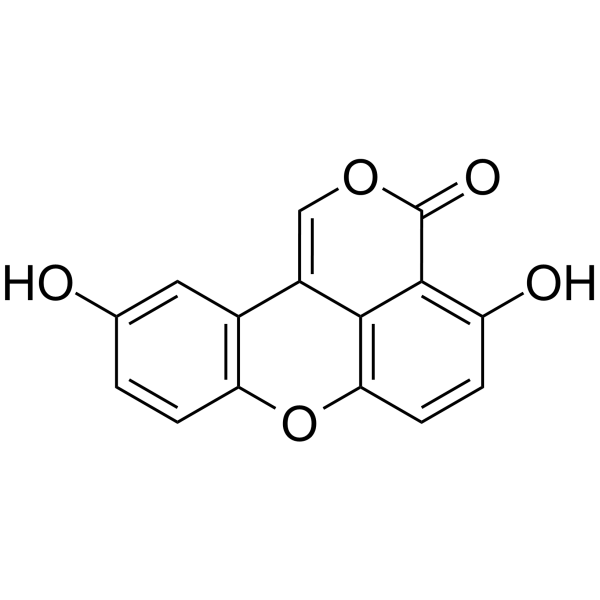
Sparstolonin B
 0 Images
Sparstolonin B acts as a selective TLR2 and TLR4 antagonist and selectively blocks TLR2- and TLR4-mediated inflammatory signaling. Sparstolonin B has anti-HIV and anticancer activities.
-
MMG-11 quarterhydrate
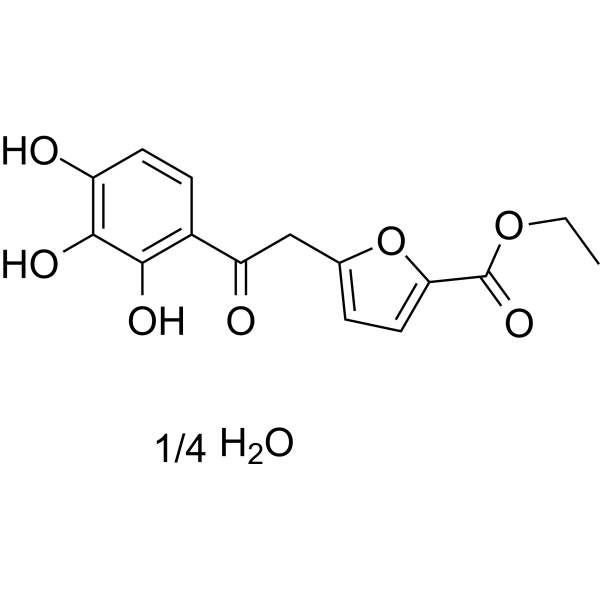 0 ImagesCat. No.: HY-112146APurity: 98.74%
-
TLR9 antagonist 1
 0 ImagesCat. No.: HY-178037CAS No.: 3105410-45-2
TLR9 antagonist 1 is a selective hTLR9 antagonist with an IC50 of 0.1 nM against hTLR9. TLR9 antagonist 1 exhibits favorable pharmacokinetic and pharmacodynamic properties. TLR9 antagonist 1 can be used in the research of systemic lupus erythematosus.
-
TLR2/9 antagonist 1
 0 ImagesCat. No.: HY-180507CAS No.: 2377679-85-9
TLR2/9 antagonist 1 (Compound 24) is a reversible covalent TLR2 (IC₅₀ = 0.5 μM (TLR2/TLR6); IC₅₀ = 0.6 μM (TLR2/TLR1)) and TLR9 (IC₅₀ = 0.32 μM) antagonist. TLR2/9 antagonist 1 has no significant effect on other TLR subtypes. TLR2/9 antagonist 1 can be used for studying central nervous system diseases and malignant tumors caused by inflammation.
-
TLR2 antagonist-1
 0 ImagesCat. No.: HY-175533
TLR2 antagonist-1 is a selective Toll-like receptor 2 (TLR2) antagonist. TLR2 antagonist-1 can effectively inhibit excessive TLR2 activation (IC50 = 11.41 μM) and the production of inflammatory factors. TLR2 antagonist-1 has metabolic stability with a half-life (T1/2) of 16.67 min in mouse liver microsomes. TLR2 antagonist-1 can be used for the researches of inflammation, immunology, and neurological disease.



